Home / Backyard & Outdoor Living / Propane Heater Outdoor Portable 18000 BTU
Propane Heater Outdoor Portable 18000 BTU
Backyard & Outdoor Living

Propane Heater Outdoor Portable 18000 BTU

Part of the Backyard & Outdoor Living collection
$160.27
Buy Now

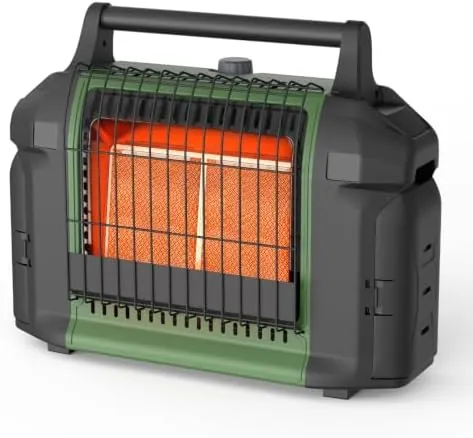
The number that governs this heater is not 18,000 BTU but one pound. A single disposable cylinder gives five hours on low and three on high, which covers a camp evening, a power cut or a morning in the garage, and then runs out. Anyone planning to heat a greenhouse through a cold week will be handling cylinders constantly. For portability that trade is the whole point: no cord, a wide carry handle, and a stable base that the tip-over switch backs up.
Output
9,000 / 18,000 BTU
Coverage
Up to 300 sq ft
Runtime
5 h low, 3 h high on 1 lb
Safety
ODS and tip-over switch

How it lives in the room

Carry spare 1 lb canisters

Three hours on high is one cold evening, and the canister always runs out at the point when nobody wants to go looking. Two spares in the vehicle or on the shelf is the working arrangement. Changing one takes a minute, but the heater has to cool before it is handled, so the real gap between canisters is longer than the swap itself.

Run the low setting outdoors

Nine thousand BTU under a covered patio or in an open garage doorway is usually enough, and halving the output stretches a single canister from three hours to five. The high setting earns its place in a closed 300 sq ft space on a genuinely cold morning, not on a mild evening outside, where most of 18,000 BTU goes straight up past the people.

Then leave the ODS some air

The oxygen depletion sensor cuts the gas when the air in the space has been used up, and in a closed garage it is the only warning there is: drowsiness and a headache arrive before anyone notices the air is wrong. A door or a vent open while it runs keeps the sensor out of the decision entirely, which is how it should be used rather than treated as a backstop.

Before you order

A 1 lb canister is not included, and runtime drops in genuinely cold weather because the cylinder chills as it empties. The three-hour figure on high assumes mild ambient temperature; near freezing, expect noticeably less from the same canister.